Artist's News

In the studio with...

© Maurine Tric / Adagp Paris, 2026
Teneille Prosper is a New Orleans–based visual artist whose work explores cultural identity, ancestral memory, misogynoir, and social justice. She studied Fine Arts at Xavier University under John T. Scott and Ron Bechet. Working in acrylic, collage, and mixed media, Prosper creates layered narratives that reflect the resilience and complexity of Black life in the South. Her work has appeared in numerous group exhibitions and is included in collections such as the City of New Orleans. She was a 2024 Artist in Residence at the Joan Mitchell Art Center and a 2025 Yaddo resident.
This residency is giving me something I really needed, time and distance. My work deals a lot with memory, lineage, and emotional undercurrents, and being away from my usual environment lets me sit with those ideas differently, with more clarity.
I don’t see it changing my direction so much as deepening it. I’m slowing down, paying closer attention to mood, psychology, and the quieter tensions inside the work. I’m also feeling more open to taking risks with space, symbolism, and what I choose to leave unsaid.
Professionally, being here expands how I think about where my work lives. The histories I explore of erasure, resilience, Black womanhood, and inheritance aren’t just American stories. Being in an international context really reinforces that. So the residency is shaping not only what I’m making, but how I understand the reach and future of my practice.
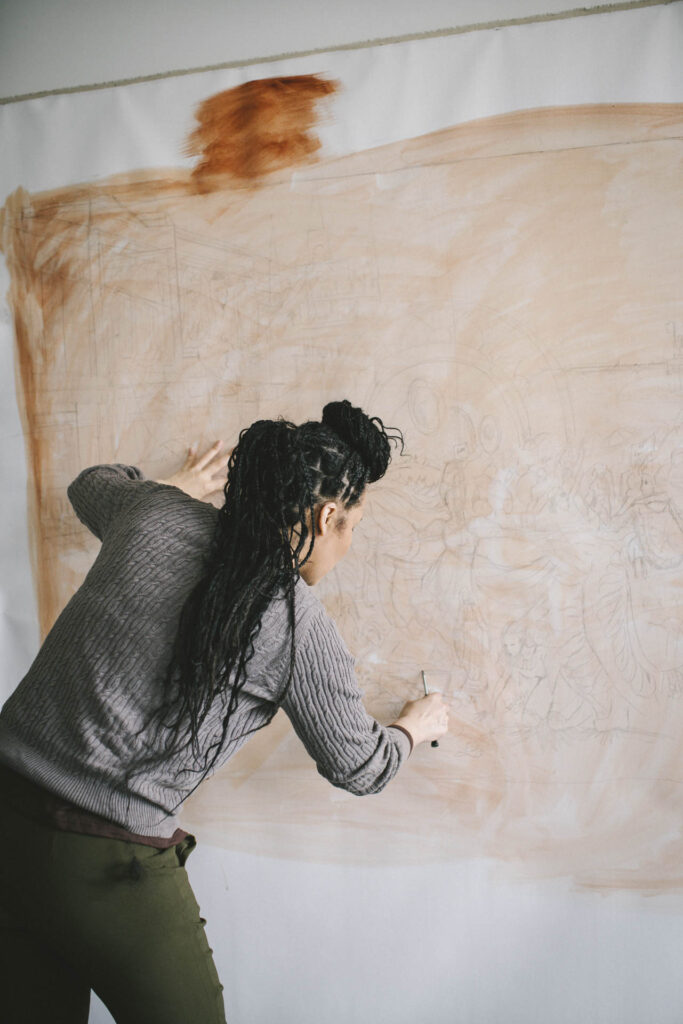
© Maurine Tric / Adagp Paris, 2026
Working in Paris places my work in a much bigger historical and cultural conversation. My paintings are rooted in Black American memory, but being here reminds me that Black history and Black presence have always extended beyond borders.
There’s something powerful about making work about lineage, survival, and erasure while surrounded by so much European art history and its colonial backdrop. It heightens my awareness of visibility of who gets centered, who disappears, and how narratives are constructed. That tension is already embedded in my work, but here it feels sharper, more present.
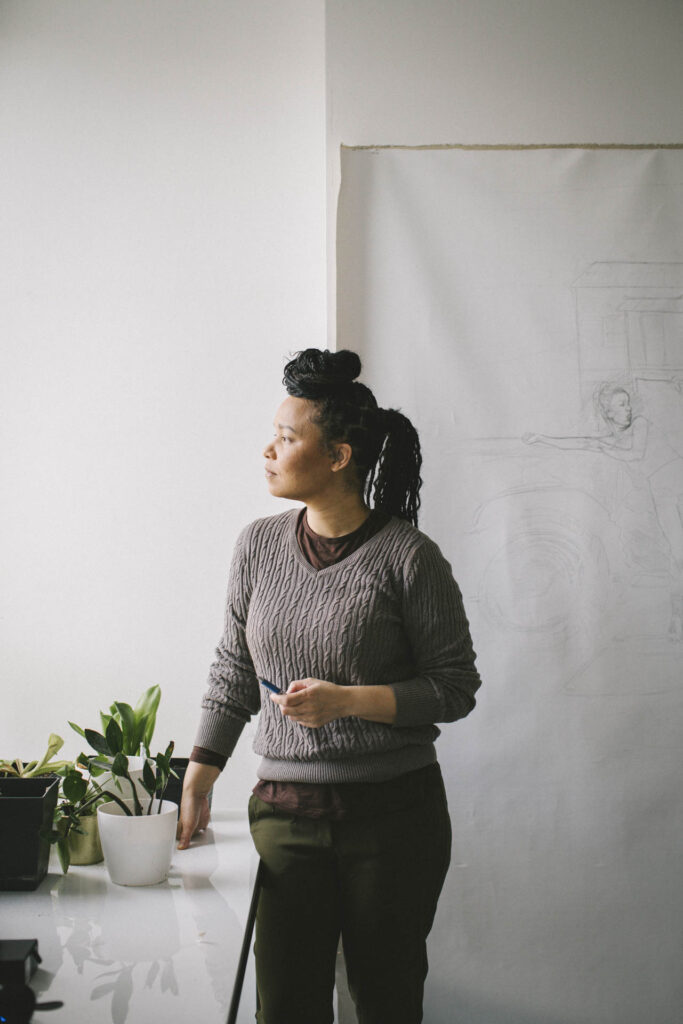
© Maurine Tric / Adagp Paris, 2026
I’m continuing to build bodies of work centered on ancestral memory, intergenerational transmission, and the interior lives of Black women.
My figures often exist at a kind of threshold—moments of sensing, awareness, or quiet reckoning. I’m really interested in what’s felt, but not fully spoken.
Since the beginning of this residence, the work has gotten quieter and more spacious. More psychological. I’m leaning into stillness, ambiguity, and subtle gestures. Letting atmosphere, absence, and emotional tension carry more of the narrative instead of spelling everything out.
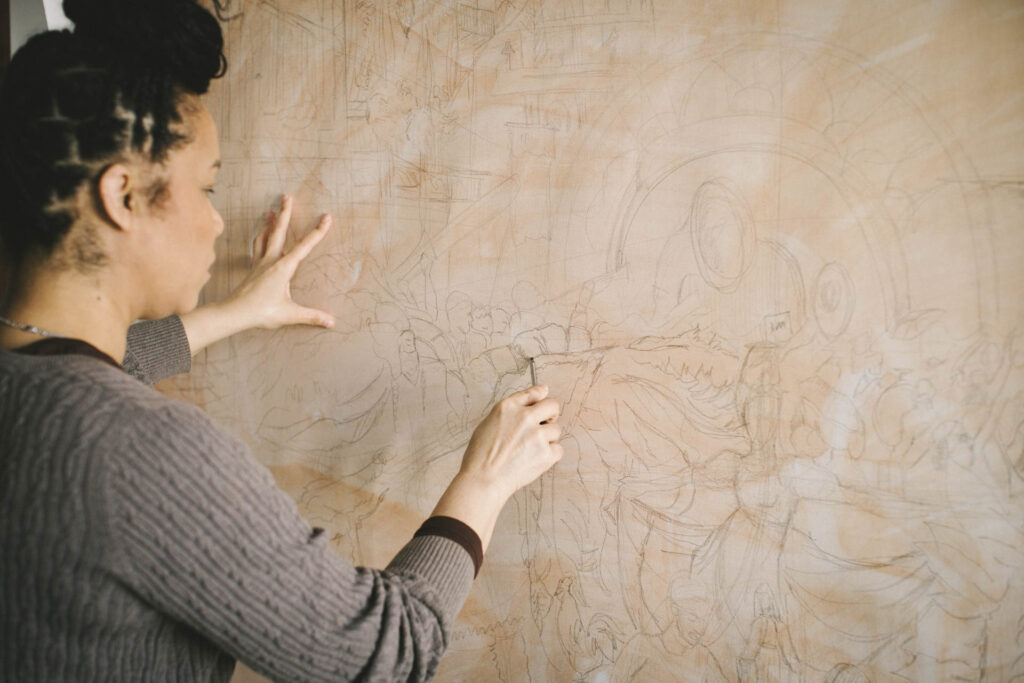
© Maurine Tric / Adagp Paris, 2026