
Artists in residence
Each year, the Cité internationale des arts welcomes more than 1,000 artists from around the world, offering them a space for creation, research, and exchange in Paris, in the Marais and Montmartre districts. Open to all artistic disciplines—visual arts, music, literature, film, design and architecture, performing arts, and curating—it enables artists to develop their projects in an environment that fosters experimentation and meaningful connections.
Hugo Hemmi
Year/s of residence : 2021, Patiño Foundation
Visual arts
Brigitte Hempel
Year/s of residence : 2006, 2008, 2011, Düsseldorf Artists' Association, Germany
Visual arts
Paul Hempton
Year/s of residence : 1969, Royal College of Arts of London, united Kingdom
Visual arts
Zeineb Henchiri
Year/s of residence : 2024, 2–12
Visual arts
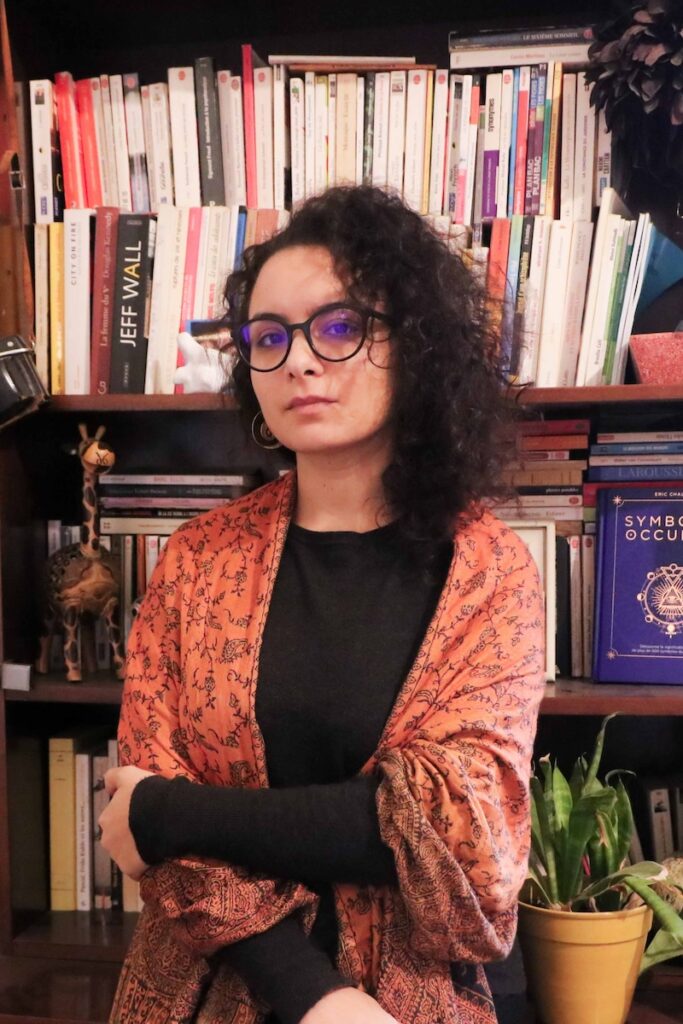
Tunisian multidisciplinary artist Zeineb Henchiri draws her inspiration from the enriching intersection between the visual and performing arts.
Born in 1992 in Tunis, where she lives and works, Zeineb has cultivated a singular artistic approach, characterized by her deep commitment to a psychoanalytic exploration of the human body, its memory and the influence of the digital on the creation of contemporary identity. After studying psychology, Zeineb turned to theater, photography and contemporary art. From actress to performer, photographer to artist, her practice resonates with the diversity of narrative materials. Her artistic career began with a series of daring explorations, rapidly evolving into creations integrating visual art, plastic installations and theatrical performances.
With meticulous precision, Zeineb examines the complex interactions between the individual, his body, his past and his present environment. She is particularly fascinated by the subjective perception of the body and the effects of time and space on human identity. The eclectic aspect of her productions underlines the disparity of the contemporary sense of identity in the face of the different materials in which it is deployed. His latest project, “Shadow”, supported by AFAC and the Kamel Lazaar Foundation and exhibited at Station B7L9 in Tunis, deals with the phenomenon of hikikomoris in Japan, isolation and the influence of social networks on mental health and self-representation.
Zeineb Henchiri|_@_|Zeineb Henchiri
Bénédicte Henderick
Year/s of residence : 2007, Wallonie-Bruxelles International (WBI), Belgium
Visual arts
David Henderson
Year/s of residence : 1968, Royal College of Arts of London, united Kingdom
Visual arts
Douglas Henderson
Year/s of residence : 2009, City of Nice, France
Music
Louis Henderson
Year/s of residence : 2018, 2014, 2016, École nationale supérieure des beaux-arts de Paris, Cité internationale des arts, Institut français
Visual arts
Suzanne Henderson
Year/s of residence : 1982, Royal College of Arts of London, united Kingdom
Visual arts
Marie Hendriks
Year/s of residence : 2007, 2008, 2011, Cité internationale des arts
Visual arts
Mary-Rose Hendrikse
Year/s of residence : 2000, 2005, South African Artistic Association for Visual Arts (SANAVA)
Visual arts
Thomas Hengelbrock
Year/s of residence : 2006, Cité internationale des arts
Music
Charlotte Heninger
Year/s of residence : 2020, Arts Déco Alumni Paris
Visual arts
James Henkel
Year/s of residence : 1986, Cité internationale des arts
Visual arts
Lily Henley
Year/s of residence : 2022, Cité internationale des arts
Music
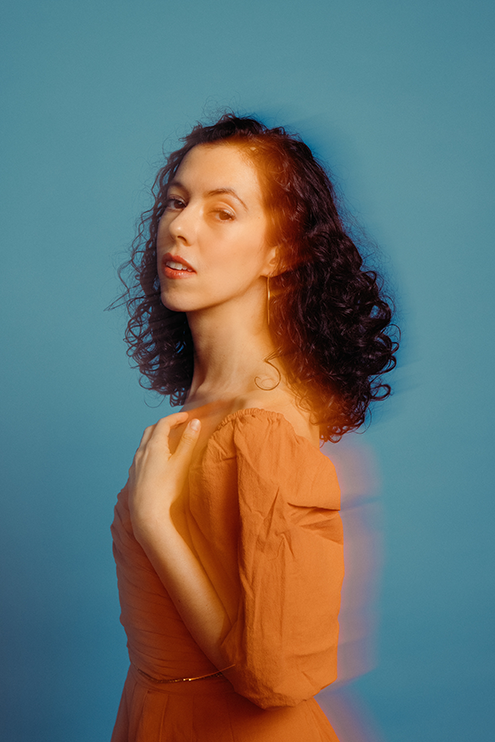
Lily Henley is an American award-winning folk singer, songwriter, and multi-instrumentalist known for her synergistic exploration of both Sephardic and American folk traditions.
She has performed extensively across North America as a solo and with others, including Grammy nominated artists Rushad Eggleston, David Krakauer, The Duhks, and Irish guitar virtuoso John Doyle.
Lily Henley’s first release, Words Like Yours was produced by renowned composer and bassist Omer Avital and was featured in numerous publications as well as on NPR and the BBC. The single and music video for her subsequent EP with producer and multi-instrumentalist Jake Sherman (Nick Hakim, Andrew Byrd, Emily King) was featured at the POOL festival of dance in Berlin.
She has two upcoming albums, Imperfect By Design, an Indie Folk anthology about love, belonging, independence, and change, and Oras Dezaoradas, a collection of brand new Judeo-Spanish Folk Songs highlighting feminine perspectives on transience, heartbreak and autonomy.
Lily Henley was recognized as a 2019 NYSCA/NYFA Artist Fellow Finalist in Music/Sound from The New York Foundation for the Arts and is the recipient of a 2021-2022 Fulbright grant, the first recipient to France in the discipline of World Music. During her residency at the Cité internationale des arts, she will work on a song project in English and Judeo-Spanish.
Ally Schmaling|_@_|Ally Schmaling
Vanessa Henn
Year/s of residence : 2005, Ministry of Science, Research and Arts of Baden-Württemberg, Germany
Visual arts
Samantha Henneke
Year/s of residence : 2018, 2026, School of Art and Design, Alfred University
Visual arts
Carsten Hennig
Year/s of residence : 2016, Federal Ministry of Culture and Media, Germany
Music
Madeleine Henning
Year/s of residence : 2023, South African National Association for the Visual Arts (SANAVA)
Visual arts
Laura Henno
Year/s of residence : 2011, Cité internationale des arts
Visual arts
