
Artists in residence
Each year, the Cité internationale des arts welcomes more than 1,000 artists from around the world, offering them a space for creation, research, and exchange in Paris, in the Marais and Montmartre districts. Open to all artistic disciplines—visual arts, music, literature, film, design and architecture, performing arts, and curating—it enables artists to develop their projects in an environment that fosters experimentation and meaningful connections.
Maria Pavlovska
Year/s of residence : 2006, 2014, Ministry of Culture of the Republic of Macedonia
Visual arts
Natalia Pavlovskaya
Year/s of residence : 2010, City of Paris, France
Visual arts
Taki Pavlovski
Year/s of residence : 1985, 1990, 2009, Ministry of Culture of the Republic of Macedonia, Union of the Association of Artists (SULUJ), Serbia
Visual arts
Fula Paxinos
Year/s of residence : 2009, 2012, Cité internationale des arts, South African Artistic Association for Visual Arts (SANAVA)
Visual arts
Jean Louis Paya
Year/s of residence : 1980, Cité internationale des arts
Music
Arya Payal
Year/s of residence : 2026, Institut français
Visual arts
Edith Payer
Year/s of residence : 2012, Federal Ministry for arts, culture, the civil service and sport
Visual arts
Elisabeth Payer
Year/s of residence : 2002, 2003, Cité internationale des arts, Visarte - Graubünden Professional Association of Visual Artists, Switzerland
Visual arts
Leïla Payet
Year/s of residence : 2020, Trame
Visual arts
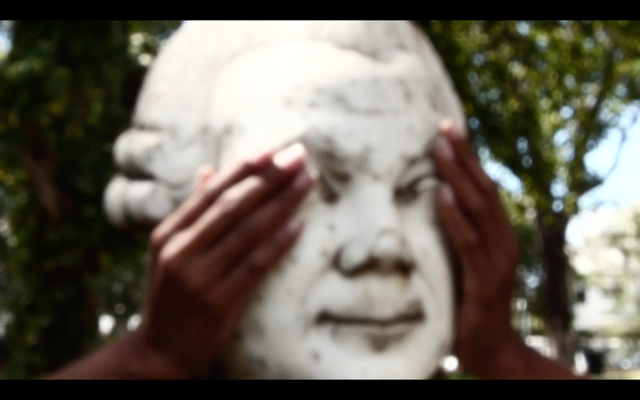
“Leïla Payet is working on the “fabrication narrative” of the island territory she inhabits. From a research atlas containing reserves of images and data, she composes open-ended and dialogical works. These are partly concerned with what is called “primitive” or “exotic” art and the ways in which they exist on the periphery of globalized thought. Conceived as embryonic productions based on a primary language, her works are elaborated in the following ways like “ritornellas, graphic programs, jets of thought”.
Each corpus, including the central No statues/No statut, thus explores the processes of fabrication of a thought, a discourse or an image, raising sensitive questions about the “processes of creolisation” intimately linked to colonisation and decolonisation.
She thus constructs a global work that moves back and forth, focusing on the permeability of the ideas that circulate within it and the
non-hierarchy of the plastic vocabulary that composes it, between major and minor art, good and bad taste, image artistic, technical, media or vernacular. A work under construction, which questions our “forms of seeing” and carries a struggle for the rehabilitation of histories, languages and territories that are invisible, contorted, dispossessed.”
Leïla Quillacq, text excerpt and interview with the artist, for artists’ papers Reunion Island, 2020.
Anousha Payne
Year/s of residence : 2025, Institut français
Visual arts
Freya Payne
Year/s of residence : 1993, Royal College of Arts of London, united Kingdom
Visual arts
Julie Payne
Year/s of residence : 1994, 2003, Cité internationale des arts, Tasmania University, Australia
Visual arts
Richard Payne
Year/s of residence : 1986, Cité internationale des arts
Visual arts
Jean Paysant
Year/s of residence : 2020, Academy of Architecture
Architecture and design
Michel Paysant
Year/s of residence : 1986, Cité internationale des arts
Visual arts
Alejandro Maximo Paz
Year/s of residence : 2002, Mozarteum Argentino Foundation, Argentina
Literature
Alicia Paz
Year/s of residence : 1996, 1997, 2002, Cité internationale des arts
Visual arts
Romario Paz Gómez
Year/s of residence : 2026, Ministry of Cultures, Arts, and Knowledges of Colombia
Music
Carlos Pazos
Year/s of residence : 2005, 2007, 2008, Cité internationale des arts, Institut français
Visual arts
Anne Peabody
Year/s of residence : 2018, Sam Fox School of Design & Visual Arts, Washington University in St. Louis
Visual arts
