

Artists in residence
Each year, the Cité internationale des arts welcomes more than 1,000 artists from around the world, offering them a space for creation, research, and exchange in Paris, in the Marais and Montmartre districts. Open to all artistic disciplines—visual arts, music, literature, film, design and architecture, performing arts, and curating—it enables artists to develop their projects in an environment that fosters experimentation and meaningful connections.
Gethce Pierre
Year/s of residence : 2021, Institut français
Music
Jean Nehemy Pierre
Year/s of residence : 2020, Fondation Daniel et Nina Carasso
Literature
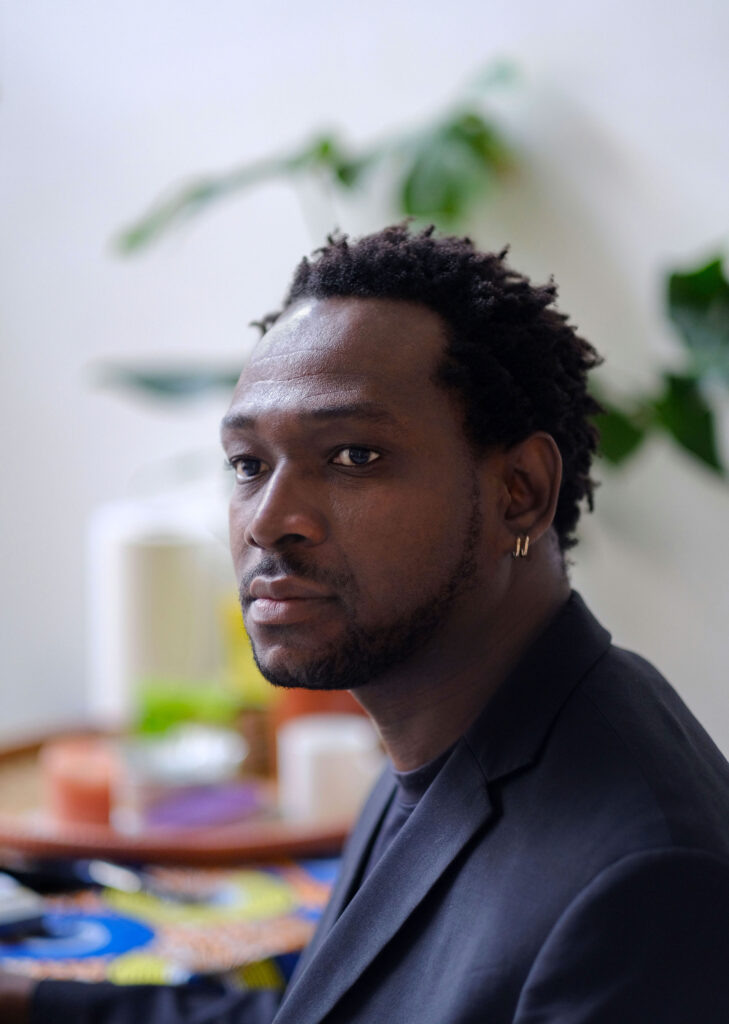
Néhémy Pierre-Dahomey is a writer, poet and philosopher. Now living in Paris, he was born in Port-au-Prince in October 1986. He studied philosophy at the Ecole Normale Supérieure, in parallel with his activities as an actor. He won the first prize for poetry of the Pléiade Group at the State University of Haiti with Mots épars, of which an eponymous collection was published with the texts of the two other winners. Then he published in 2010, still in Port-au-Prince and on his own account, Emmuré, his first booklet of verse.
Rapatriés, the first novel of Nehemy Pierre-Dahomey was published in 2017 by Editions du Seuil. Several times awarded (Société des Gens de Lettres, Carbet des lycéens de la Caraïbe, Ciné del Duca de l’Académie Française), it meets a critical and public success.
In March 2021, Combats, his second novel, was published by Seuil.
Néhémy Pierre-Dahomey diversifies his activities within the framework of a residency at the Cité internationale des arts (2020/2021) with the support of the Daniel and Nina Carasso Foundation. He wrote and developed his first short fiction film entitled Humus Baobab, dealing with the detour of resistance, and which takes place in the traditional Haitian dance scene in France.
“The excellent reputation is so rarely founded that I was almost astonished, often moved, to experience six such generous, calm and powerful months of friendly and artistic encounters.”
Bénédicte Roscot
Manon Pierrehumbert
Year/s of residence : 2012, Republic and Canton of Neuchâtel, Switzerland
Music
Caroline Pierret
Year/s of residence : 2024, Conseil des Arts et des Lettres du Québec
Visual arts
Orlando Pierri
Year/s of residence : 1975, Cité internationale des arts, Mozarteum Argentino Foundation, Argentina
Visual arts
Hetta Pieterse
Year/s of residence : 2004, South African Artistic Association for Visual Arts (SANAVA)
Visual arts
Brita Pietiainen
Year/s of residence : 1979, Finnish Foundation of the Cité des Arts de Paris
Visual arts
Markku Pietila
Year/s of residence : 2011, Finnish Foundation of the Cité des Arts de Paris
Visual arts
Sanna Pietilä
Year/s of residence : 2017, South African National Association for the Visual Arts (SANAVA)
Architecture and design
Sara Pietila
Year/s of residence : 2014, Finnish Foundation of the Cité des Arts de Paris
Visual arts
Tuulikki Pietila
Year/s of residence : 1967, 1975, Finnish Foundation of the Cité des Arts de Paris
Visual arts
Sergey Pietilya
Year/s of residence : 2004, 2008, Cité internationale des arts, Union of Russian Artists
Visual arts
Alain Pietka
Year/s of residence : 2017, 2015, City of Nice, France
Music
Marie Pietrafesa
Year/s of residence : 1974, Institut français
Music
Jorge Pietrapertosa
Year/s of residence : 1982, Institut français
Visual arts
MARGOT Pietri
Year/s of residence : 2020, Cité internationale des arts
Visual arts
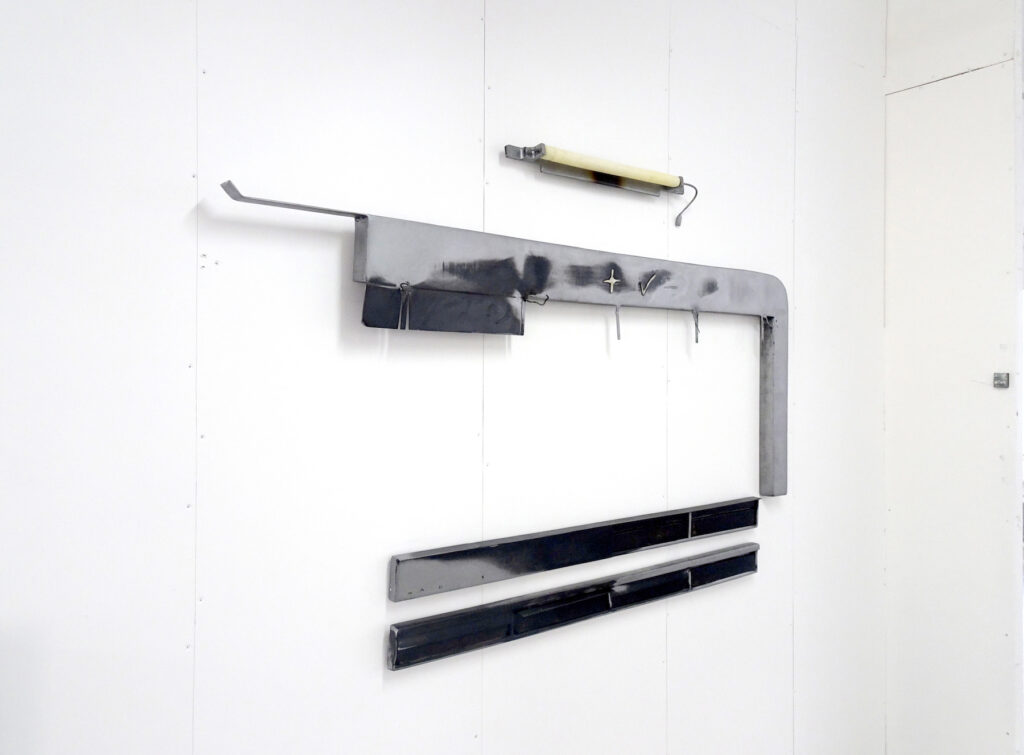
On a day of eclipse, Margot Pietri fantasized a world marked by the disappearance of the landmark star of humanity for millennia, the sun. The artist drew several conclusions, including the extinction of terrestrial species and forms of life, the obsolescence of beliefs and methods of measurement centred on the sun (clocks, the cycle of the day, etc.) and the need to renegotiate work rhythms. This scenario with its post-apocalyptic overtones then inspired a series of texts and sculptural landscapes. They are populated with signs and tools “at rest” like compasses and dials, all of which have completely lost their sense of direction, i.e. no longer showing, transforming or indexing anything.
A laboratory of resilience, this post-sun fiction has a science-fiction feel to it, but above all it allows the artist to map and articulate a generalized contemporary disorientation in the face of the need to update our ways of thinking. In Logiques des mondes, the philosopher Alain Badiou forged a concept: that of a “sluggish world” to describe a reality where “we communicate infinitely”, where “there is no point” and where everything is so branched and nuanced that no higher authority can make a decision. From climate change to the end of the great unifying narratives, and including deconstruction through critical thinking: “sluggishness” awaits us in spite of all these GPS devices at our fingertips.
How can we position ourselves? Where to land? In relation to what? Millennia-old landmarks collapse when they do not crumble. And then what? Margot Pietri saves some of them from sinking and gives consistency to the emotional states that arise from that moment when a world dissolves and a new, fledgling one emerges. From the remains, fragments, ruins and signs that she erases or allows to appear in her sculptures, Margot Pietri builds a fertile ground for disorientation, laying the foundations for a new experimental science capable of outlining one or more common directions once again.
Julie Ackerman
Giuseppe Pietroniro
Year/s of residence : 2005, International Artistic Association Incontri, Italy
Visual arts
Stefan Pietryga
Year/s of residence : 1994, Ministry of Science, Research and Arts of Baden-Württemberg, Germany
Visual arts
Giorgia Piffaretti
Year/s of residence : 2025, Visarte Ticino
Visual arts
Marjolaine Pigeon
Year/s of residence : 2003, Alumni Association of the Ecole Nationale Supérieure des Arts Décoratifs, France
Visual arts
