
Artists in residence
Each year, the Cité internationale des arts welcomes more than 1,000 artists from around the world, offering them a space for creation, research, and exchange in Paris, in the Marais and Montmartre districts. Open to all artistic disciplines—visual arts, music, literature, film, design and architecture, performing arts, and curating—it enables artists to develop their projects in an environment that fosters experimentation and meaningful connections.
Simon Rouby
Year/s of residence : 2018, Cité internationale des arts
Literature
INTERVIEW
What are the changes and evolutions to note in your work thanks to the residency at the Cité internationale des arts?
“Above all, it is the opportunity to have a large workshop that makes my work evolve. I deploy in space, in contrast to more geographically unstable periods when my studio is a pop-up from a laptop screen. In the digital age it is easy to forget the importance of real space, the benefit of a confrontation with matter, whether for drawing, sculpture, or even the projection of video images. Screens have been shrinking so much lately that we are now revisiting the classics of cinema on an iphone! It is a period of miniaturization. This studio in Montmartre is for me the opportunity to return temporarily to works of a more… majestic dimension.”
An anecdote about your residency at the Cité internationale des arts?
“When we returned from the Villa Medici two years ago, we had presented here, with Native Maqari and Keziah Jones, the Blackout performance and symbolically “erased” the building. It was a good way to get to know the place, even if at the time I didn’t think I would ever live there. During the preparation phase of the project, I met several generations of artists who live here and became aware of the historical importance of the site. Today I am enjoying it for a while and I hope many others will follow me, because it is a precious place that respects the time of research.”
BIOGRAPHY
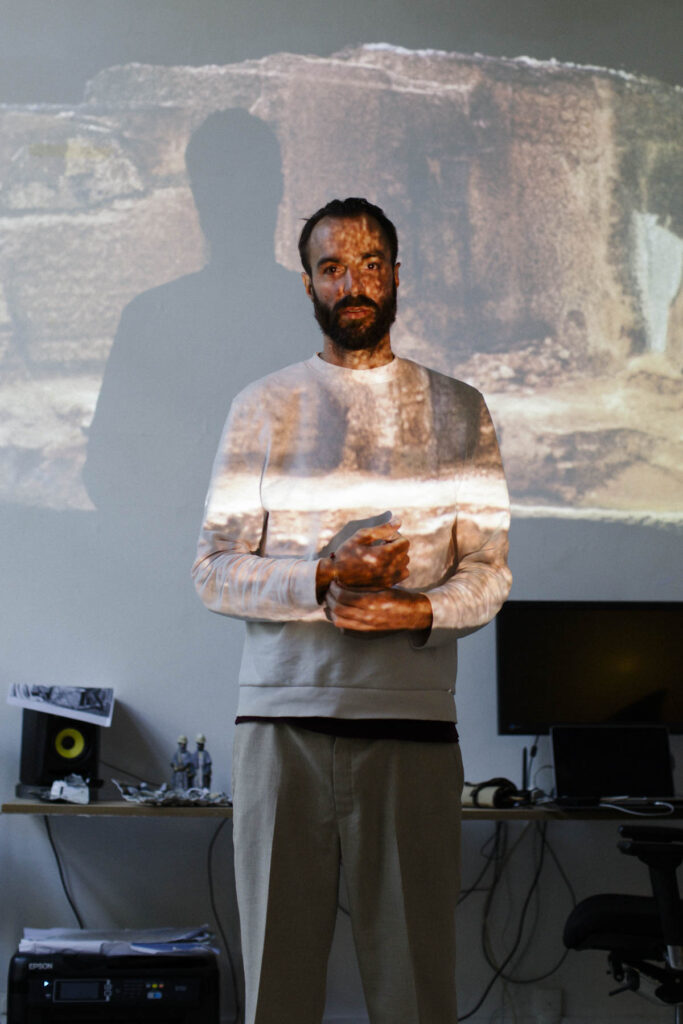
Simon Rouby, born in 1980, studied painting by hand before moving on to other media such as sculpture and painting.
He studied filmmaking, first in Paris at Les Gobelins, then in Calarts, Los Angeles. His graduation films have been selected at numerous international festivals. In 2015, he finalizes Adama, his first feature film, nominated at the Césars and European Film Awards as one of the three best animated films of the year.
He is a resident of the Académie de France in Rome, Villa Médicis in 2016/2017, where he developed a practice in video installation. In 2018, he continued this research in the Kerguelen Islands, as a laureate of the Atelier des Ailleurs before joining the Cité internationale des arts, where he developed his next animated feature film.
Maurine Tric|_@_|Maurine Tric
Patrick Rouch
Year/s of residence : 1977, Cité internationale des arts
Music
Gilles Roudière
Year/s of residence : 2025, Académie des beaux-arts
Visual arts
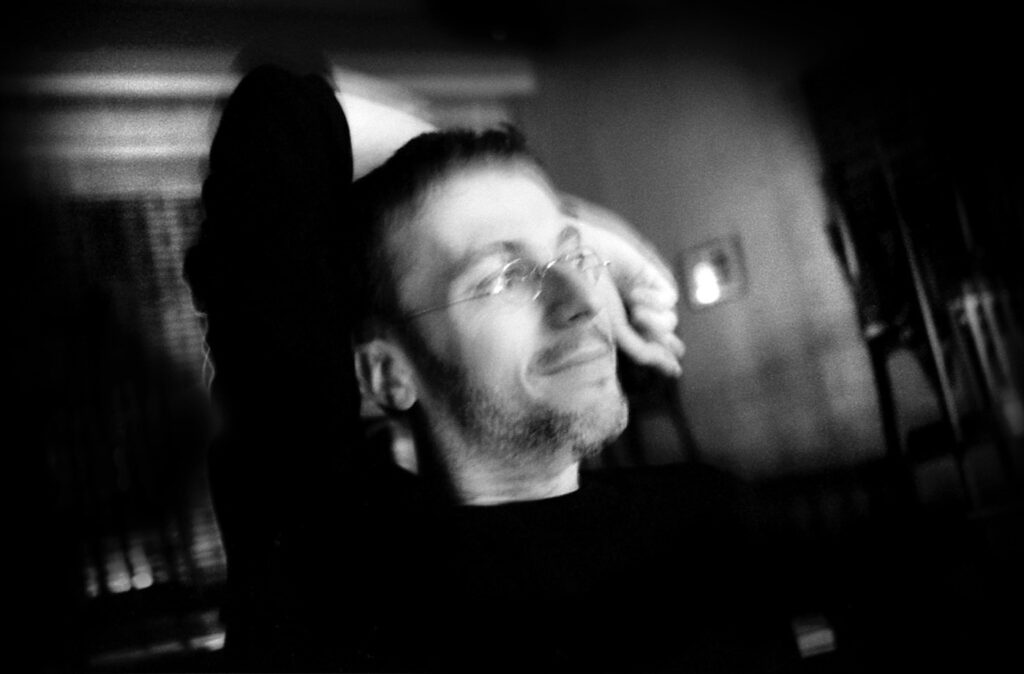
Born in 1976, Gilles Roudière is a self-taught photographer who has been living and working between Tours and Berlin since 2005. His work focuses mainly on Central and Eastern European countries. His first series on Albania has been exhibited several times at the Circulation(s) festival in Paris, the Promenades Photographiques de Vendôme and the Imagerie photographic centre in Lannion. More recently, he has continued his photographic exploration in Israel, Palestine, Turkey and the Caribbean.
© Damien Daufresne
Rouen Rouenov
Year/s of residence : 2004, Union of Bulgarian Artists
Literature
Gwenaelle Rouger
Year/s of residence : 2015, Cité internationale des arts
Music
Fathad Rouhafzay
Year/s of residence : 1989, Visual Arts Administration of Iran
Visual arts
Abdel-Karim Rouhani
Year/s of residence : 1978, Visual Arts Administration of Iran
Visual arts
Mahnach Rouhani
Year/s of residence : 1980, 1982, Cité internationale des arts, Visual Arts Administration of Iran
Visual arts
Djafar Rouhbakhch
Year/s of residence : 1974, 1977, Cité internationale des arts, Visual Arts Administration of Iran
Music
Marianne Rouhiainen
Year/s of residence : 2022, 2000, Finnish Cité internationale des arts Foundation, Finnish Foundation of the Cité des Arts de Paris
Dance
Paul Rouillard
Year/s of residence : 1970, Cité internationale des arts
Visual arts
Abdallah Rouissi
Year/s of residence : 1974, Ministry of Culture and Heritage Preservation, Tunisia
Visual arts
Sacha Roulet
Year/s of residence : 2008, Canton of Vaud, Switzerland
Visual arts
Vincent Roumagnac
Year/s of residence : 2019, Institut français
Theater
Fabienne Roumet
Year/s of residence : 1996, 1997, City of Toulouse - Direction des Affaires culturelles, France, Cité internationale des arts
Visual arts
Elbam Roushdy
Year/s of residence : 1974, Institut français
Visual arts
Tuomas Rousi
Year/s of residence : 1985, 2001, Finnish Foundation of the Cité des Arts de Paris
Music
Claudine Rousseau
Year/s of residence : 1972, 1974, Cité internationale des arts, Private Action in favour of the Cultural World, France
Visual arts
Denis Rousseau
Year/s of residence : 1997, Cité internationale des arts, Conseil des Arts et des Lettres du Québec
Visual arts
Grégoire Rousseau
Year/s of residence : 2019, Cité internationale des arts
Visual arts
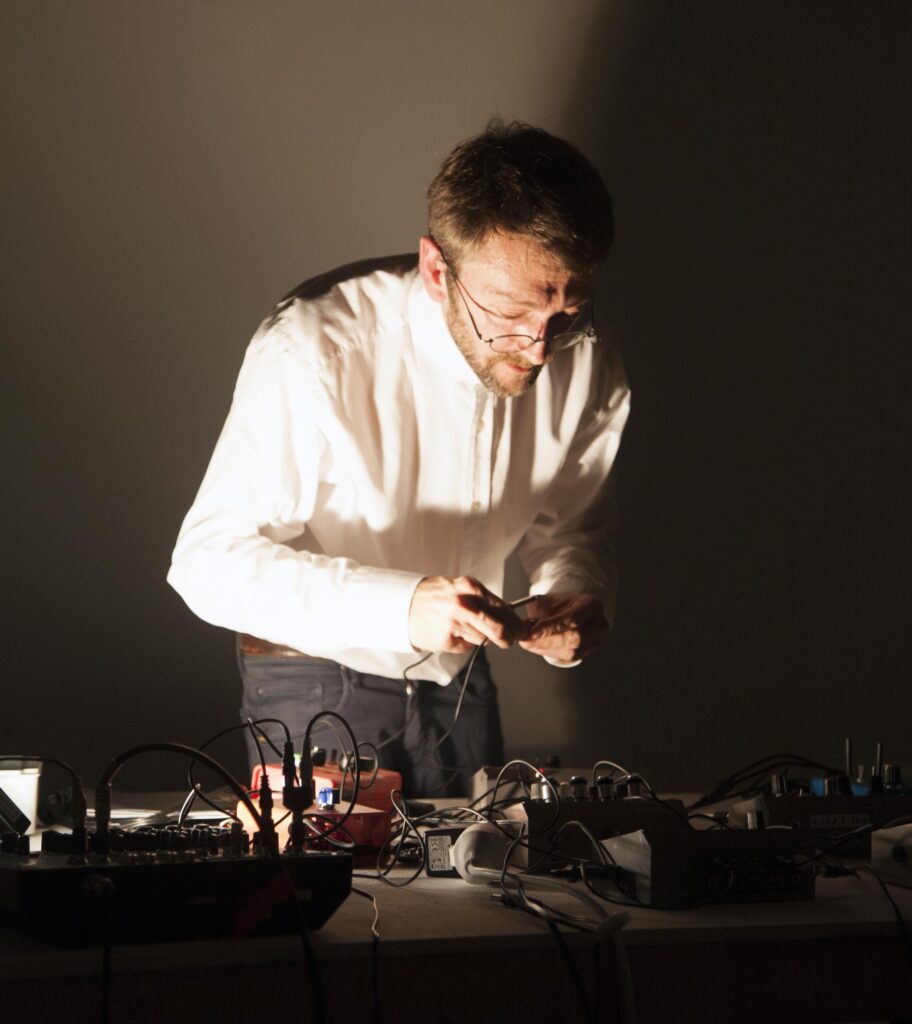
Operating between Helsinki and Paris, Gregoire Rousseau works as artist, educator and expert in technology. He received his Electrical engineering diploma in 2006 and his Master of Fine Arts in 2018.
Grégoire Rousseau’s research focuses on electricity as form of energy in the arts and underlying implications in everyday life. Electric energy produces motion, lights, audio, as well as activates software within digital platform.
His artistic practice stands for material as language: concept finds form based on knowledge. Performances on stage operate as a sequence in time to experiment and research how materials and artistic content actually work all together once confronted to audience. There is no clear demarcation line between live act and installation thought for art gallery space, both contribute in a formal way of expression to develop his work. Study on contradictions generates a field of knowledge and a space for hisart practice.
Algorithmic processes challenge our perception, interpretation, and transformation of our society. The possibilities induced by this new area in technology produces both a need in awareness and a new field of research in new models in form of resistance.