Himat M. Ali, Zbyněk Baladrán, Taysir Batniji, Louidgi Beltrame, Emma Charrin, Gustavo Ciríaco & João Gonçalo Lopes, Cristina Escobar, Olia Fedorova, Gluklya, Ola Hassanain, Thomas Henriksson, Kari Ikonen, Young Joo Lee, Hussein Nassereddine, Wendie Zahibo
Sign in
↓
To Make Space for the World
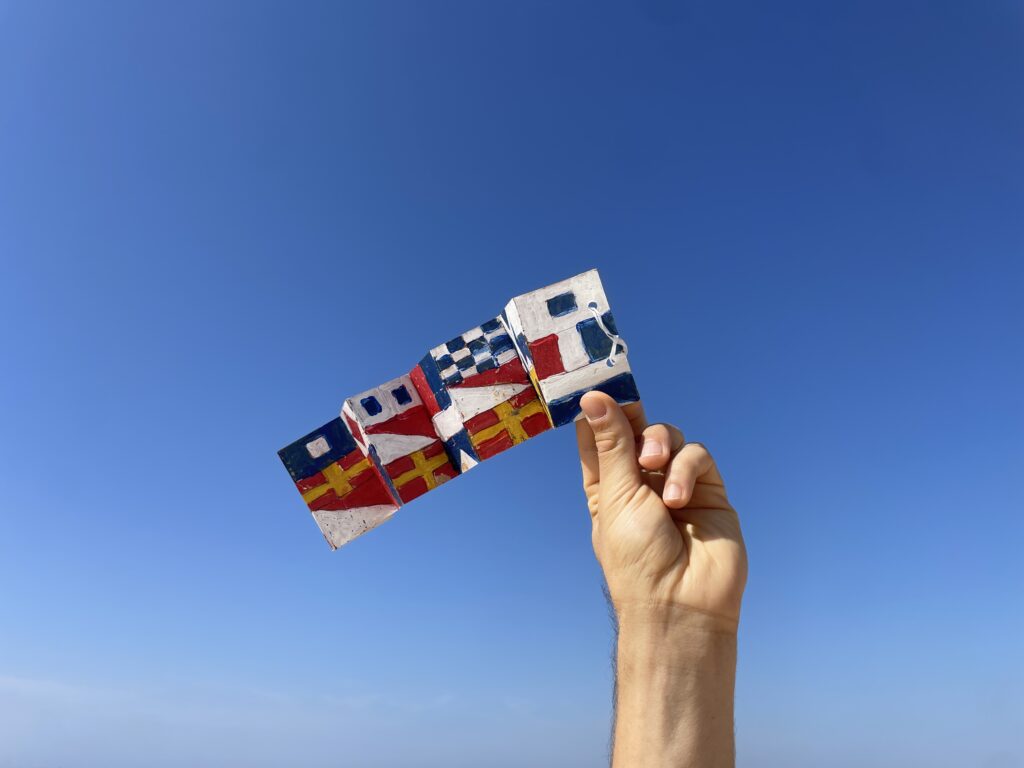
Gustavo Ciríaco & João Gonçalo Lopes, Caravanserá, 2025 © João Gonçalo Lopes
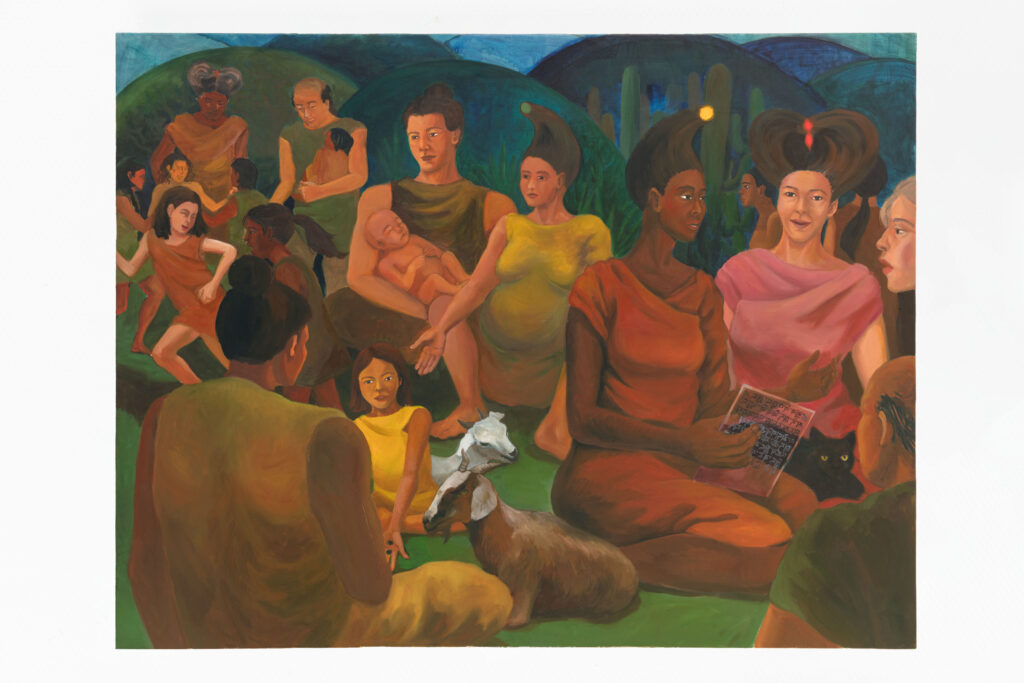
Young Joo Lee, The Congress, 2026, Oil on canvas © Courtesy of the artist
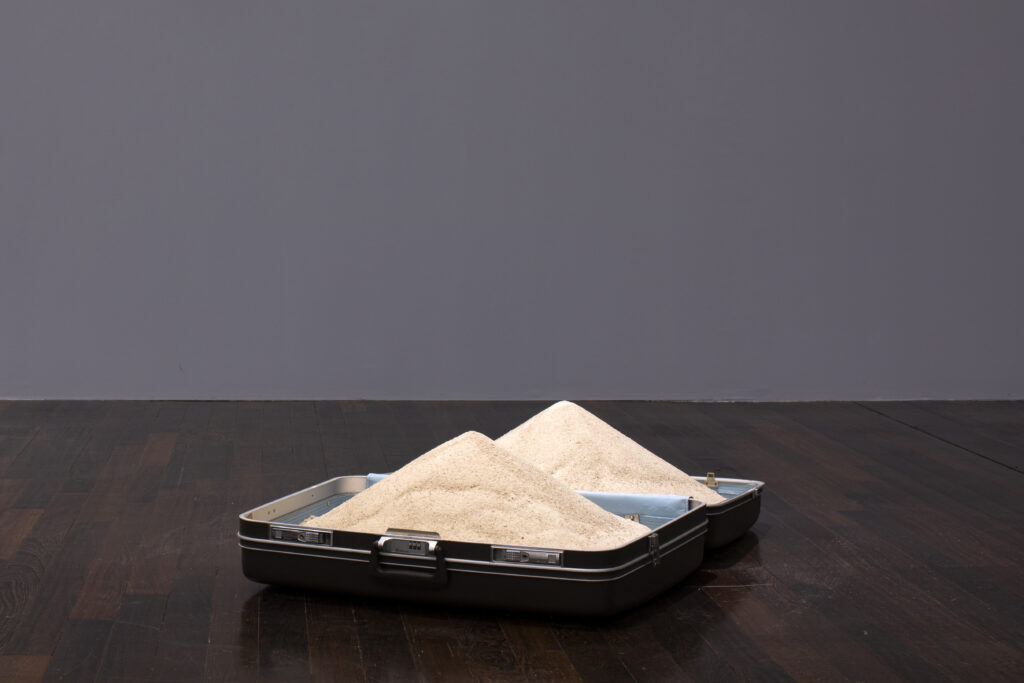
Taysir Batniji, Untitled, 1998-2021, suitcase and sand, variable dimensions © Courtesy of the artist
Taking Cité internationale des arts as the starting point, To Make Space for the World proposes a wider reflection on how contemporary artists address the promises, contradictions and afterlives of cultural internationalism, a form of exchange, action, and solidarity that extends beyond national frameworks.
Bringing together 16 artists from 15 different countries (in residence between 2003 and the present day), To Make Space for the World presents the relation to borders, known as the international, not as a settled value, but as something lived unevenly: a daily process of negotiation, translation, hospitality and forced displacement for many; a structure of opportunity, but also of dependence; a promise that could orient artists powerfully, while never entirely escaping the political and cultural asymmetries of the world around it.
While the Cité internationale des arts was conceived during the interwar period and established after the Second World War, shaped by a Europe scarred with war and genocide, the founders proposed another horizon: one in which artistic exchange might produce forms of proximity and relation that nation states had failed to sustain in the decades before. In its name, Cité internationale des arts, the emphasis falls on the place itself as an international exception with its own codes, rhythms and temporary communities. Cité was imagined as a city within a city, a place that might suspend, if only partially, the hierarchies of the world of nation states beyond its walls. Yet Cité was also inseparable from a wider French cultural ambition. It has therefore always held two contrasting impulses: a commitment to be open to the world and a mission to put Paris at its centre. This tension inspired the exhibition title and many of the participating artists, raising questions of power relations and access to mobility.
Some artists propose horizontal forms of gathering: carnival and caravan as metaphors of exchange and safe harbor, song as the promise of return amidst annihilation, or matrilineality as an alternative social structure. Other projects remind us of art as a temporary refuge from grief and trauma, a suturing of wounds physical and symbolic, or a herald of hidden histories coming home to roost.
Curated by: Chương-Đài Võ, Charles Esche, and Federica Chiocchetti.
This exhibition is supported by the Embassy of the Kingdom of the Netherlands.
The Fondation Cartier pour l’art contemporain and the Festival d’Automne are partners in the talks and events associated with the exhibition.
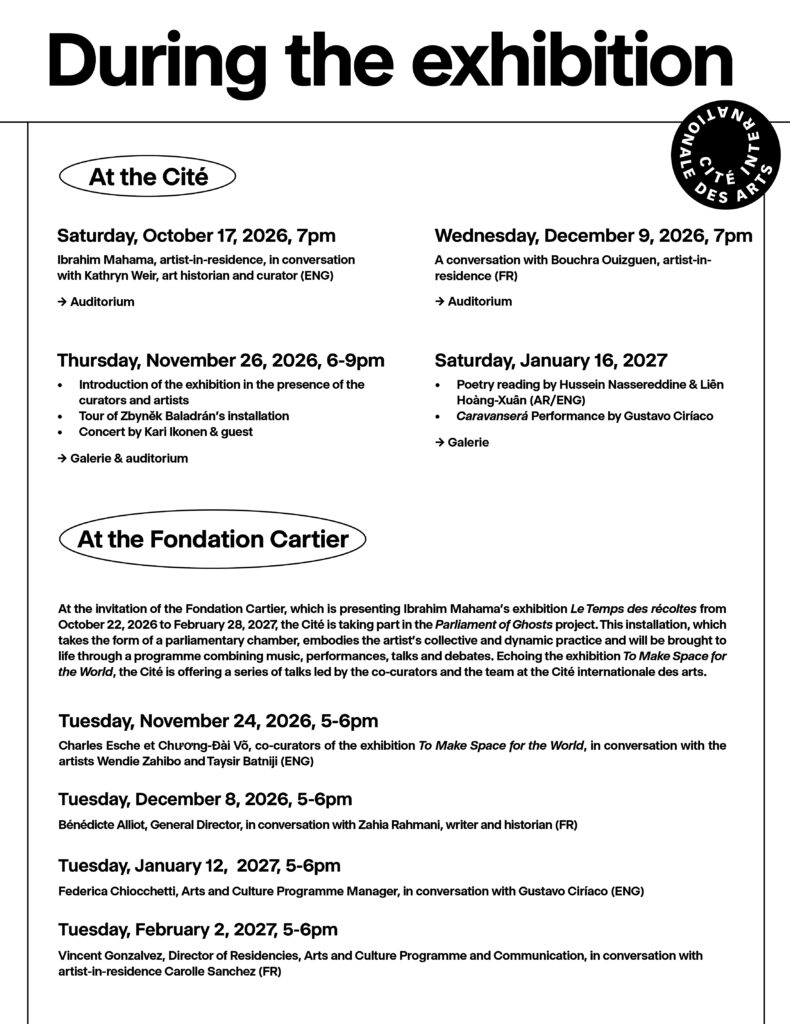
During the exhibition
At the Cité
→ Saturday, October 17, 2026, 7pm
Ibrahim Mahama, artist-in-residence, in conversation with Kathryn Weir, art historian and curator (ENG)
↘︎ Auditorium
→ Thursday, November 26, 2026, 6-9pm
• Introduction of the exhibition in the presence of the curators and artists
• Tour of Zbyněk Baladrán’s installation
• Concert by Kari Ikonen & guest
↘︎ Galerie & auditorium
→ Wednesday, December 9, 2026, 7pm
A conversation with Bouchra Ouizguen, artist-in-residence (FR)
↘︎ Auditorium
→ Saturday, January 16, 2027
• Poetry reading by Hussein Nassereddine & Liên Hoàng-Xuân (AR/ENG)
• Caravanserá performance by Gustavo Ciríaco
↘︎ Galerie
At the Fondation Cartier
At the invitation of the Fondation Cartier, which is presenting Ibrahim Mahama’s exhibition Le Temps des récoltes from October 22, 2026 to February 28, 2027, the Cité is taking part in the Parliament of Ghosts project. This installation, which takes the form of a parliamentary chamber, embodies the artist’s collective and dynamic practice and will be brought to life through a programme combining music, performances, talks and debates. Echoing the exhibition To Make Space for the World, the Cité is offering a series of talks led by the co-curators and the team at the Cité internationale des arts.
→ Tuesday, November 24, 2026, 5-6pm
Charles Esche and Chương-Đài Võ, co-curators of the exhibition To Make Space for the World, in conversation with the artists Wendie Zahibo and Taysir Batniji (ENG)
→ Tuesday, December 8, 2026, 5-6pm
Bénédicte Alliot, General Director, in conversation with Zahia Rahmani, writer and historian (FR)
→ Tuesday, January 12, 2027, 5-6pm
Federica Chiocchetti, Arts and Culture Programme Manager, in conversation with Gustavo Ciríaco (ENG)
→ Tuesday, February 2, 2027, 5-6pm
Vincent Gonzalvez, Director of Residencies, Arts and Culture Programme and Communication, in conversation with artist-in-residence Carolle Sanchez (FR)
Exhibition
Marais Site → Galerie
October 8, 2026 – January 16, 2027
Opening : Wednesday, October 7, 2026, 6pm – 9pm
Wednesday to Saturday from 2 pm to 7 pm
Late opening on Wednesdays until 9 pm
Free entry
Accessibility:
We regret that not all our exhibition spaces currently meet the accessibility standards for people with reduced mobility. We are working to improve this for the future. For any inquiries regarding the accessibility of the spaces at the Cité internationale des arts, we are available to respond on a case-by-case basis. You can contact us at the following address: programmation@citedesartsparis.fr
Programme of events accompanying the exhibition
Press Kit
To Make Space for the World (EN)With our partners: