

Artists in residence
Each year, the Cité internationale des arts welcomes more than 1,000 artists from around the world, offering them a space for creation, research, and exchange in Paris, in the Marais and Montmartre districts. Open to all artistic disciplines—visual arts, music, literature, film, design and architecture, performing arts, and curating—it enables artists to develop their projects in an environment that fosters experimentation and meaningful connections.
Nurit Gur-Lavy
Year/s of residence : 2008, 2009, 2014, Cité internationale des arts, Ministry of Culture and Sports, Israel
Visual arts
Gurbangeldi Gurbanov
Year/s of residence : 2007, International Confederation of Artists Unions
Visual arts
Maryte Gureviciene
Year/s of residence : 2006, Vilnius Academy of Arts (VDA), Lithuania
Visual arts
Crispin Gurholt
Year/s of residence : 2010, Institut français
Visual arts
Vibeke Gurholt
Year/s of residence : 1995, 1998, Cité internationale des arts, Frits Thaulow Foundation, Norway
Spectacle vivant
Thomas Gurin
Year/s of residence : 2023, 2–12
Music
Tom Gurin is an American composer and multimedia artist working in Paris. He was the 2021-2022 recipient of a Fulbright-Harriet Hale Woolley Award at the Fondation des États-Unis (CiuP), where he completed separate residencies in both music composition and sculpture. A Hays Traveling Fellowship from Brandeis University supported his work building sound sculptures inspired by French bells. Tom is an alumnus of Yale University, the École Normale de Musique de Paris “Alfred Cortot”, and the Royal Carillon School in Belgium as a Fellow of the Belgian American Educational Foundation.
Tom has presented his work in cabaret shows, at art galleries such as the DOC artspace, and at music festivals such as the Archipel Festival in Geneva, IlSUONO Contemporary Music Week in Italy, and the American Conservatory program in Fontainebleau, where he received the Marion Tournon-Branley prize for his installation and performance combining music with architecture. In addition, he participated in the highSCORE New Music Festival in Italy and the Imani Winds Chamber Music Festival in New York City, where he was an Emerging Composer Fellow. The Yale Symphony Orchestra, the National Youth Orchestra of China, the Sonus Foundation for New Music and Contemporary Performing Arts, and other ensembles around the world have performed his compositions.
Tom is also an active composer and performer of carillon music, having won first prize in the 2022 Perpignan carillon composition contest. In 2023, he composed and installed the new Angélus for the Perpignan Cathedral bells. He has performed dozens of guest carillon recitals in France, Belgium, the Netherlands, and the United States. He previously served as Duke University Chapel Carillonneur in North Carolina.
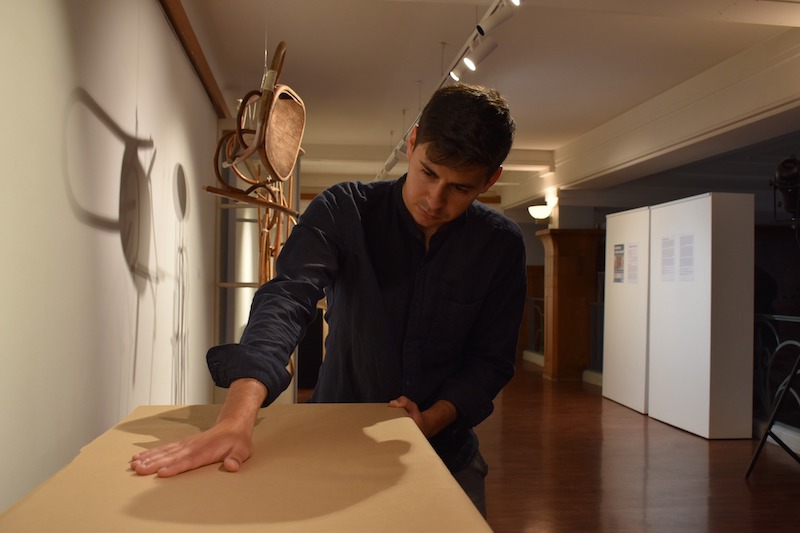
Paul Victor
Mustafa Gurler
Year/s of residence : 2005, Finnish Foundation of the Cité des Arts de Paris
Visual arts
Julia Gurnsy
Year/s of residence : 1980, Royal College of Arts of London, united Kingdom
Visual arts
Feryal Gurpinar
Year/s of residence : 1999, Institut français
Literature
Katja Maria Gurtler
Year/s of residence : 2024, Austrian Federal Ministry for Housing, Arts, Culture, Media and Sport
Visual arts
Maia Gusberti
Year/s of residence : 2004, Federal Ministry for arts, culture, the civil service and sport
Visual arts
Gualtiero Guslandi
Year/s of residence : 1995, 1996, Cité internationale des arts, Visarte - Professional Association of Visual Artists of Zentralschweiz, Switzerland
Visual arts
Bruce Gustafson
Year/s of residence : 1975, Institut français
Music
Tatu Gustafsson
Year/s of residence : 2022, Finnish Cité internationale des arts Foundation
Visual arts
Denis Pierre Gustin
Year/s of residence : 1990, Wallonie-Bruxelles International (WBI), Belgium
Music
Maria Guta
Year/s of residence : 2026, Office for Culture of the Canton of Neuchâtel
Cinema
Inge Gutbrod
Year/s of residence : 2004, Bavarian Ministry of Education, Culture, Science and the Arts, Germany
Visual arts
Edgar Gutbub
Year/s of residence : 1975, Ministry of Science, Research and Arts of Baden-Württemberg, Germany
Visual arts
Gerhard Gutenberger
Year/s of residence : 2004, Federal Ministry for arts, culture, the civil service and sport
Visual arts
Andrea Guterres
Year/s of residence : 2023, 2–12
Music
