

Artists in residence
Each year, the Cité internationale des arts welcomes more than 1,000 artists from around the world, offering them a space for creation, research, and exchange in Paris, in the Marais and Montmartre districts. Open to all artistic disciplines—visual arts, music, literature, film, design and architecture, performing arts, and curating—it enables artists to develop their projects in an environment that fosters experimentation and meaningful connections.
Lubovac Ragib
Year/s of residence : 1985, 1986, Cité internationale des arts, Union of the Association of Artists (SULUJ), Serbia
Visual arts
Bryndis Hrönn Ragnarsdottir
Year/s of residence : 2012, City of Reykjavik, Iceland
Visual arts
Gudrun Hronn Ragnarsdottir
Year/s of residence : 1994, City of Reykjavik, Iceland
Visual arts
Ragnheidur Ragnarsdottir
Year/s of residence : 2000, City of Reykjavik, Iceland
Visual arts
Océane Ragoucy
Year/s of residence : 2024, Academy of Architecture
Architecture and design
Fariba Rahaei
Year/s of residence : 2011, Visual Arts Administration of Iran
Visual arts
Soheila Rahaei
Year/s of residence : 2011, 2013, Visual Arts Administration of Iran
Visual arts
Eliane Raheb
Year/s of residence : 2016, 2025, Institut français
Cinema
Abdelhamid Rahiche
Year/s of residence : 2021, Trame
Visual arts
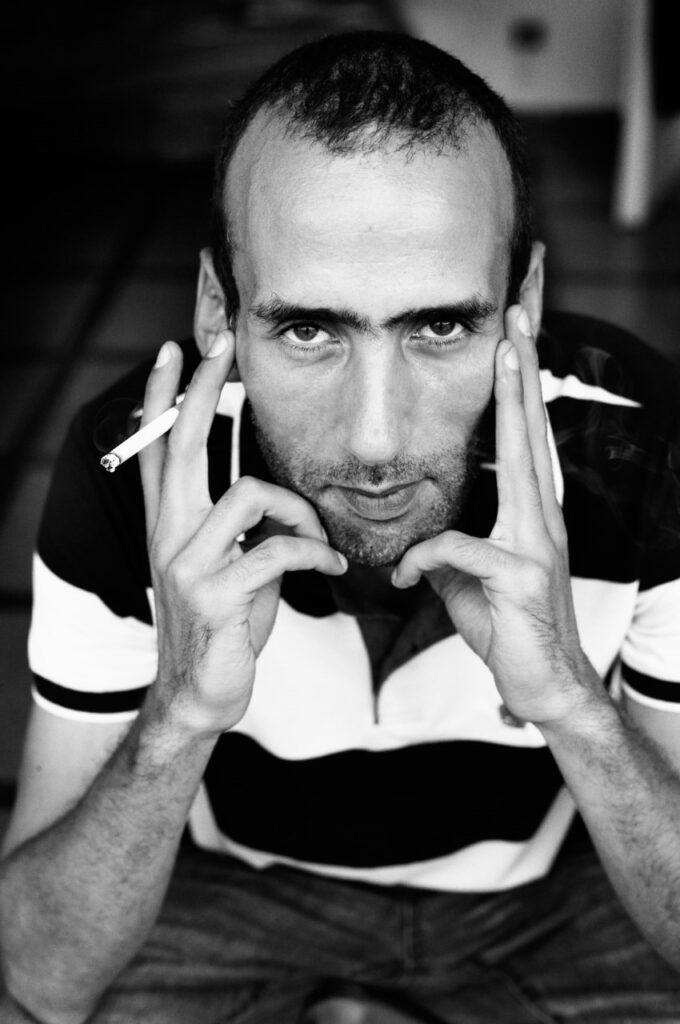
Hamid Rahiche is an Algerian photographer who has been working for several years on urban issues and social changes around the city of Algiers and more broadly around the Mediterranean territory.
The artist testifies to the place of men in their daily lives and living spaces. Through his works, he seeks to understand to what extent places make men what they are by questioning the individuality in the mass. Hamid Rahiche is a photographer of the human being, nourished by his own history and culture, which he uses as a backdrop. He develops a singular style in an intimate and sensitive photographic style. The striking photographs in his series Algiers, Climat de France were taken over several years in the heart of the Climat de France architectural complex in Algiers, where the photographer grew up.
Built between 1955 and 1957 on the heights of Bab el Oued, facing the sea, Climat de France was above all the grandiose and humanistic vision of the French architect Fernand Pouillon. He started this project of a monumental and utopian city in the middle of the Algerian war in order to relieve the slums and thus alleviate a serious housing crisis, counting on this atypical and spectacular construction to welcome and pacify the Algerian people. This city, an atypical example of architecture, built around a large square called “the two hundred columns” was supposed to accommodate 30,000 people. It currently accommodates more than 50,000 inhabitants. The urban utopia has become an overcrowded ghetto and the scene of a real social malaise.
Hamid Rahiche knows the violence, the codes, the rights and rules of this city. But he also knows all the possibilities of this place, of the optimism that is not spoken of. From this closed and opaque place, the artist, by dint of respect and patience, has succeeded in extracting luminous shots of truth and authenticity. His photographs tell us about playful kids, loving mothers, young people who dream of a better future. Hamid Rahiche depicts through his works a completely different reality. He breathes an identity of his own, a voice to the most marginalized. Hamid Rahiche’s images speak to us of sensitivity and hope in the heart of a concrete prison.
– Béranger Chamboisier
Hamid Rahiche
Heikki Rahikainen
Year/s of residence : 1995, Finnish Foundation of the Cité des Arts de Paris
Visual arts
Manijeh Rahim Tabrizi
Year/s of residence : 2006, Visual Arts Administration of Iran
Visual arts
Hamid Rahimi Baferani
Year/s of residence : 2014, 2015, Visual Arts Administration of Iran
Visual arts
Mohammad Rahimi
Year/s of residence : 2011, Visual Arts Administration of Iran
Visual arts
FIRI Rahman
Year/s of residence : 2023, Institut français
Visual arts
Sukanya Rahman
Year/s of residence : 1965, Institut français
Visual arts
Farida Rahmani
Year/s of residence : 1980, 1981, 1982, Cité internationale des arts, Institut français
Visual arts
Pantea Rahmani
Year/s of residence : 2004, Visual Arts Administration of Iran
Visual arts
Thilleli Rahmoun
Year/s of residence : 2016, Cité internationale des arts
Visual arts
Younès Rahmoun
Year/s of residence : 2001, 2007, 2015, Cité internationale des arts, Institut français , Ministry of Culture and State Secretariat for Culture of the Kingdom of Morocco
Visual arts
Niloofar Rahnama
Year/s of residence : 2011, Cité internationale des arts
Visual arts
